
The Hidden Complexity of Beach Rentals
At first glance, beach rentals look like the dream investment.
Beautiful scenery. High nightly rates. Strong seasonal demand. Social-media-worthy sunsets.
And in many ways, they truly are.
But coastal vacation homes operate in a unique environment that comes with its own set of considerations. Owners who have previously managed city condos, cabins, or suburban short-term rentals often find that beach homes simply require a different approach to maintenance and operations.
Oceanfront and near-shore properties exist in one of the most dynamic residential environments. Salt air, moisture, wind, sand, and shifting weather patterns naturally affect structures, appliances, and outdoor spaces over time. When you factor in guest expectations and seasonal demand, managing a beach rental simply requires a more hands-on and proactive approach than many owners initially expect.
Understanding these factors doesn’t make beach ownership any less appealing—it simply helps owners prepare for what goes on behind the scenes.
Below is a closer look at what coastal property management actually involves.
Salt Air Corrosion: A Coastal Maintenance Reality
Salt air is often associated with that refreshing ocean breeze, but it also contains microscopic salt particles suspended in moisture. Over time, these particles settle on surfaces and can gradually affect certain materials.
Once salt accumulates, it attracts moisture from the air and speeds up oxidation. As a result, exterior materials tend to age faster than they would in inland environments.
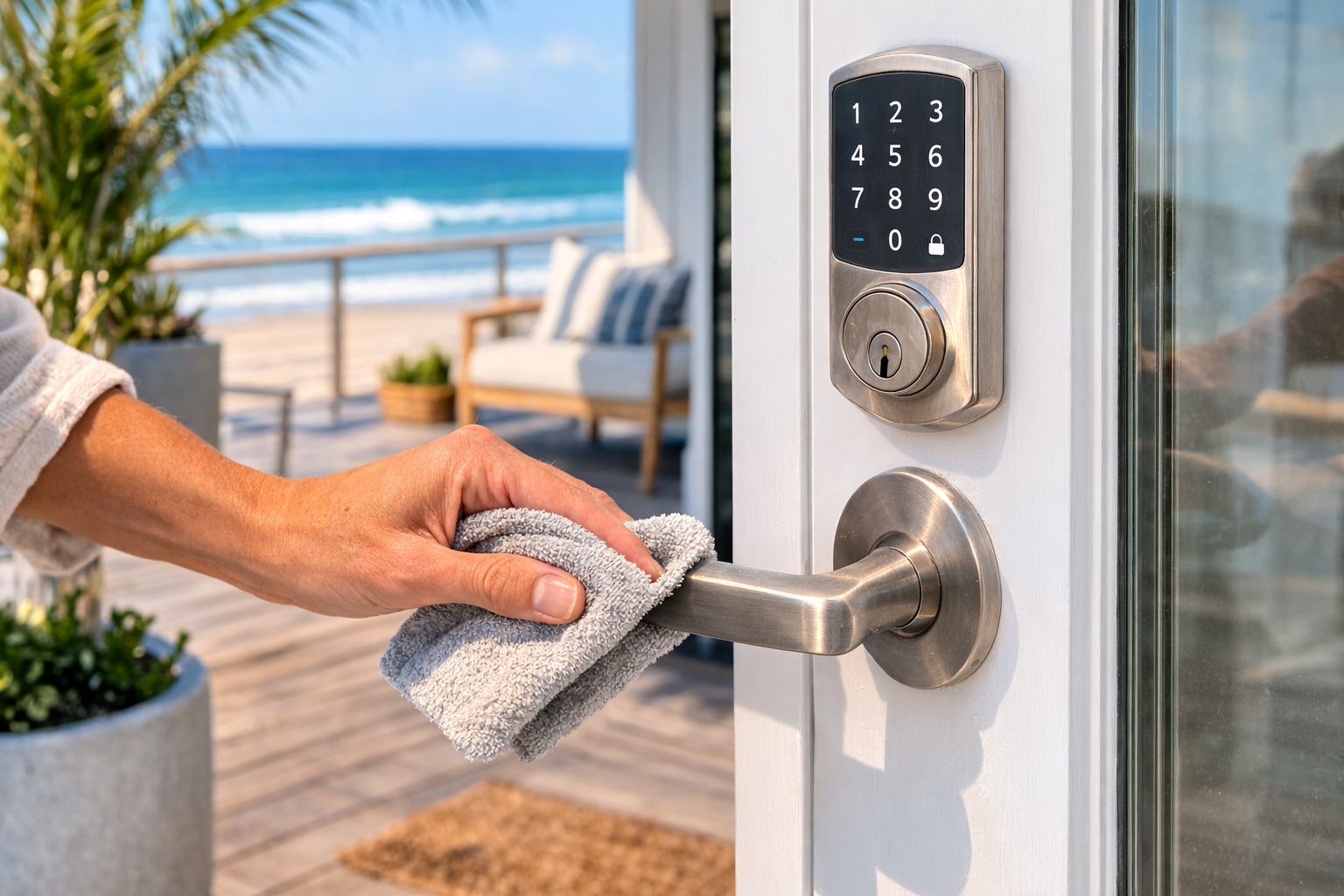
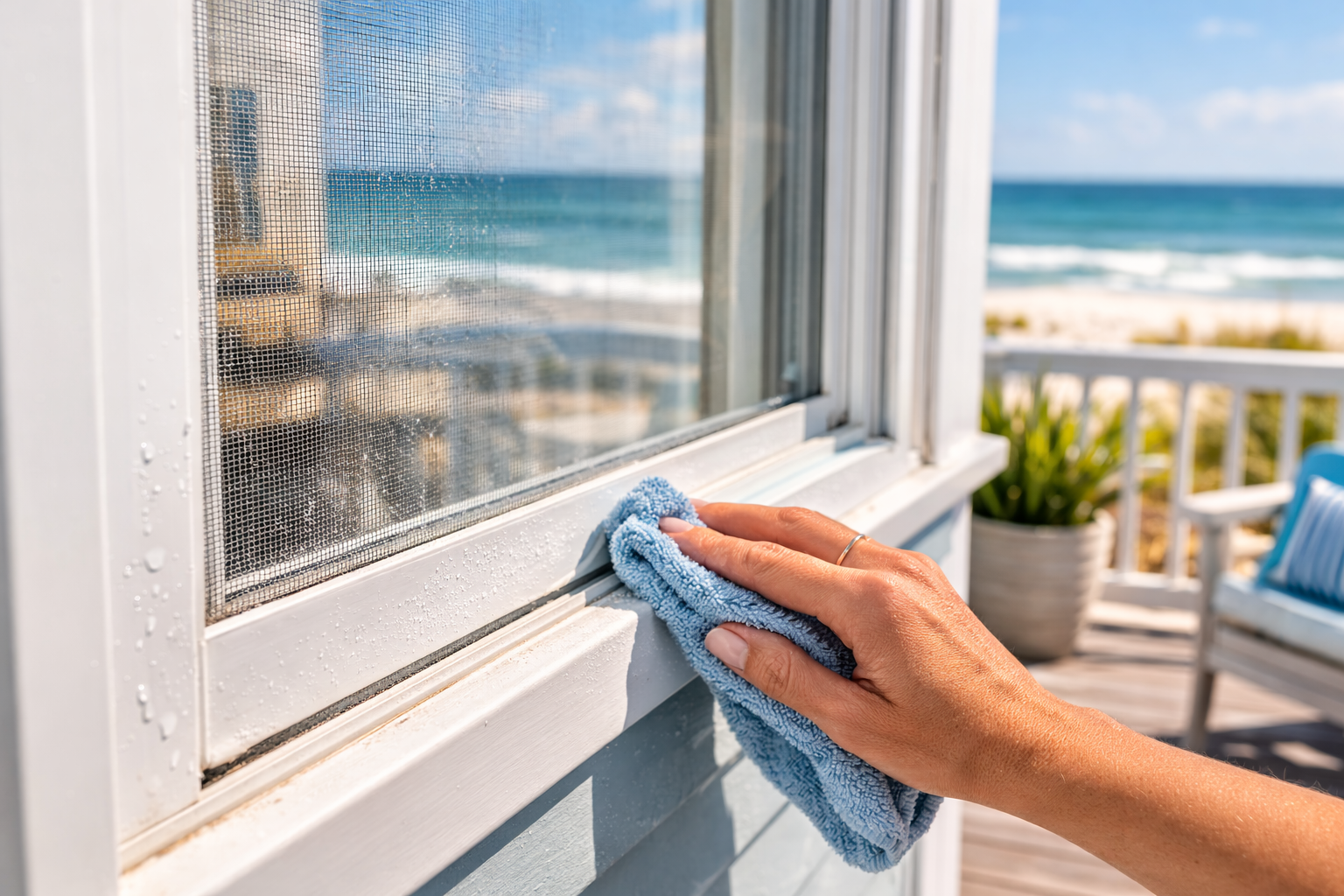

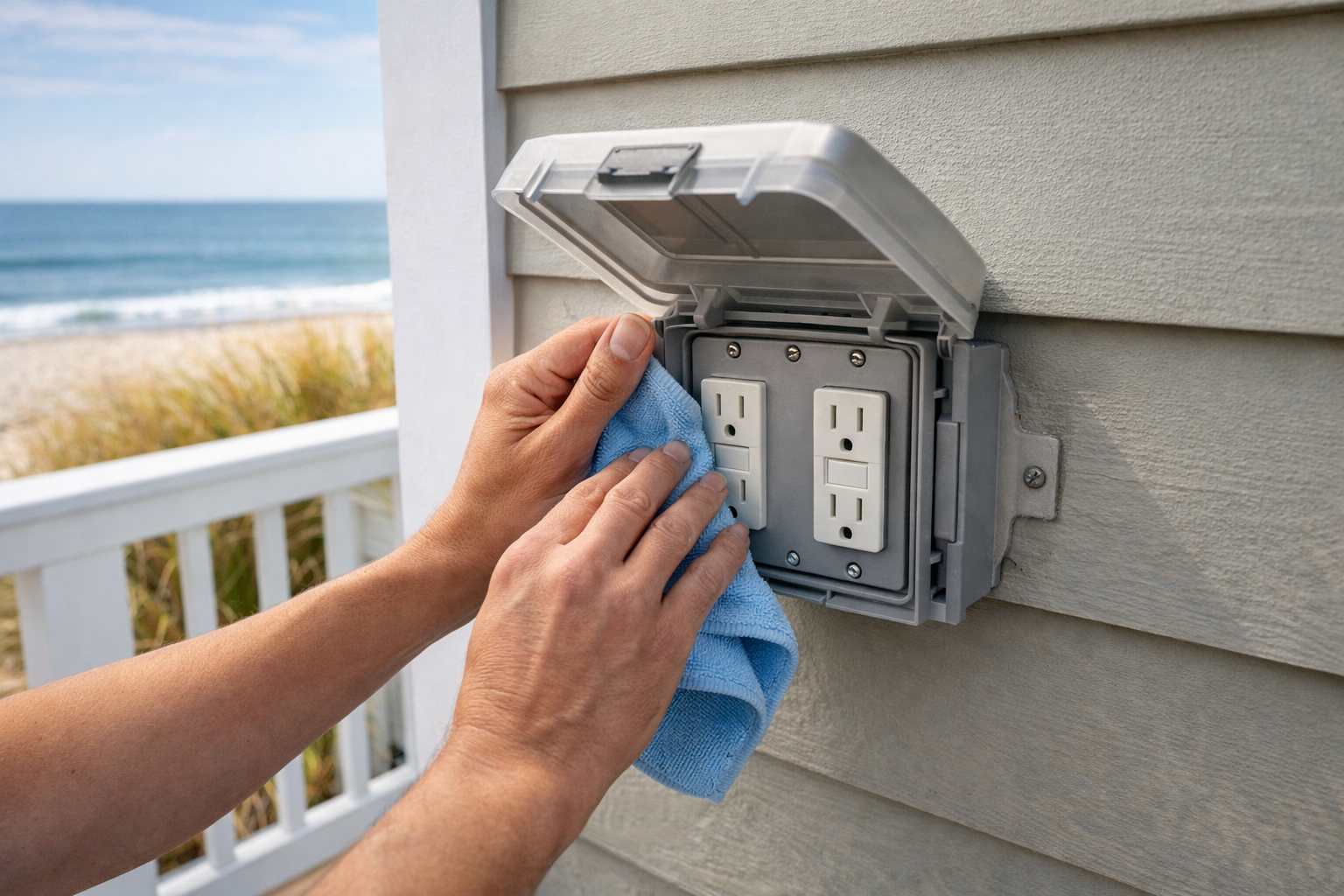
Commonly affected items:
Exterior door hardware and locks
Railings and fasteners
Outdoor furniture
Grills and outdoor kitchens
HVAC condensers
Window frames and screens
Electrical fixtures and outlets
Even stainless steel isn’t completely immune — some grades can still develop pitting in marine environments without routine cleaning.
Typical lifespan comparisons often look like this:
Inland: 7–10 years
Near the ocean: 1–3 years without maintenance
Fortunately, this doesn’t mean constant replacement. Regular freshwater rinsing, protective coatings, and periodic inspections can significantly extend the life of outdoor components. For coastal homes, these small maintenance routines simply become part of normal property care.
HVAC Systems Work Harder Near the Coast
Beach homes rely heavily on their HVAC systems — especially during warmer months.
Coastal climates tend to have higher humidity levels, and managing that humidity is just as important as cooling the air. That means HVAC systems are performing two jobs simultaneously:
Cooling indoor temperatures
Removing excess moisture from the air
Because of this additional workload, HVAC systems near the coast often require a bit more attention.
Common coastal HVAC considerations:
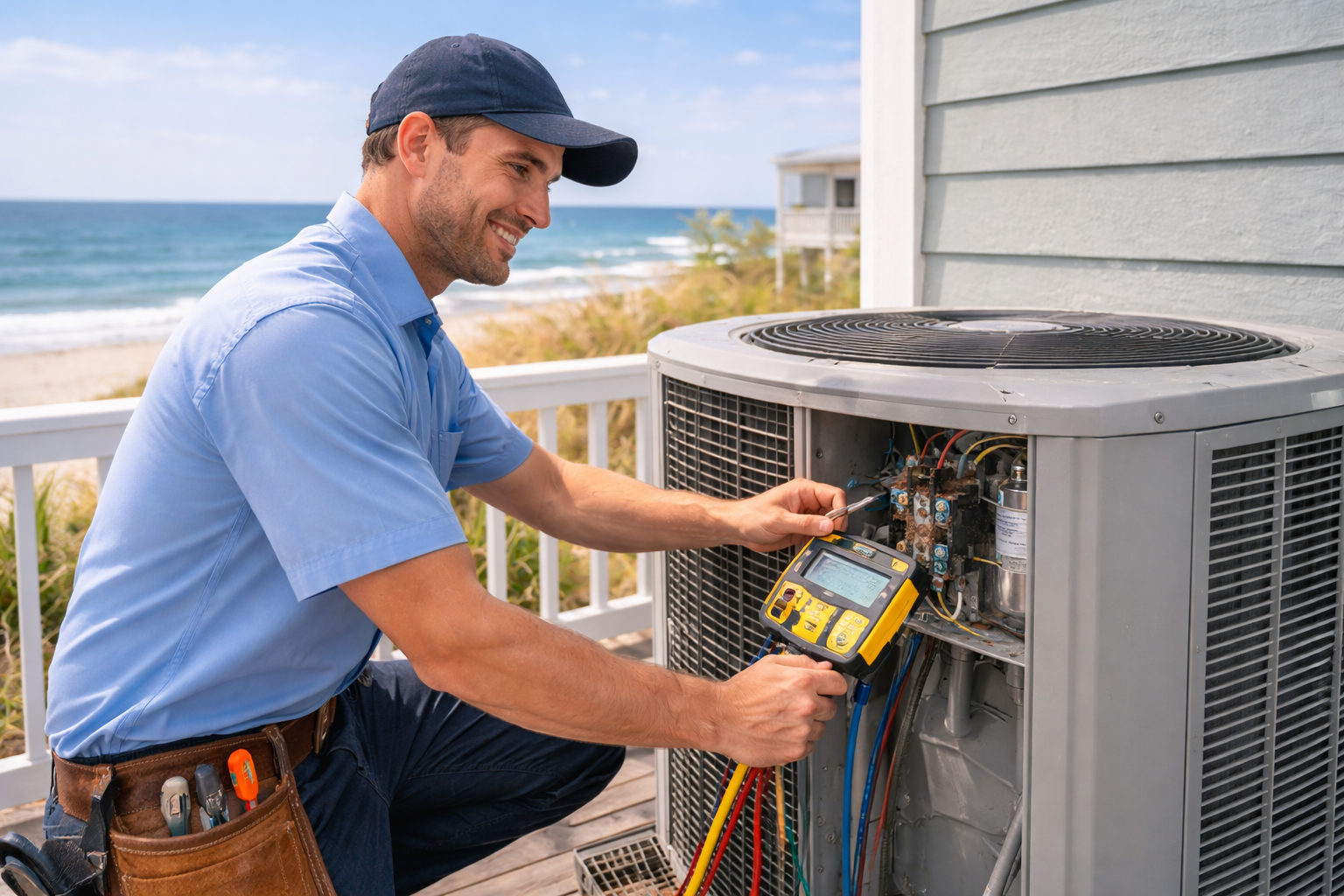
Salt exposure on condenser coils
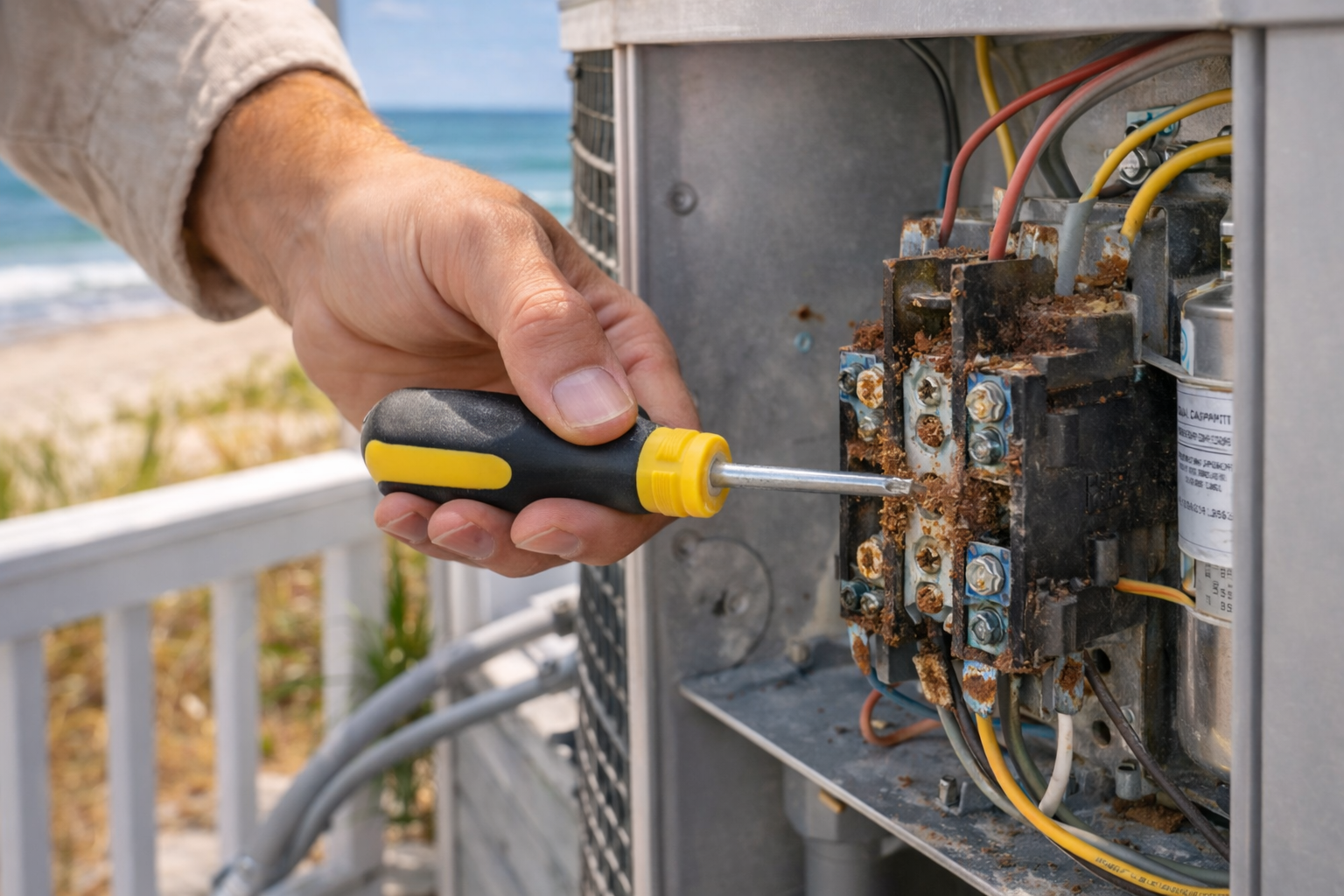
Corrosion on electrical contacts
Condensate line algae growth
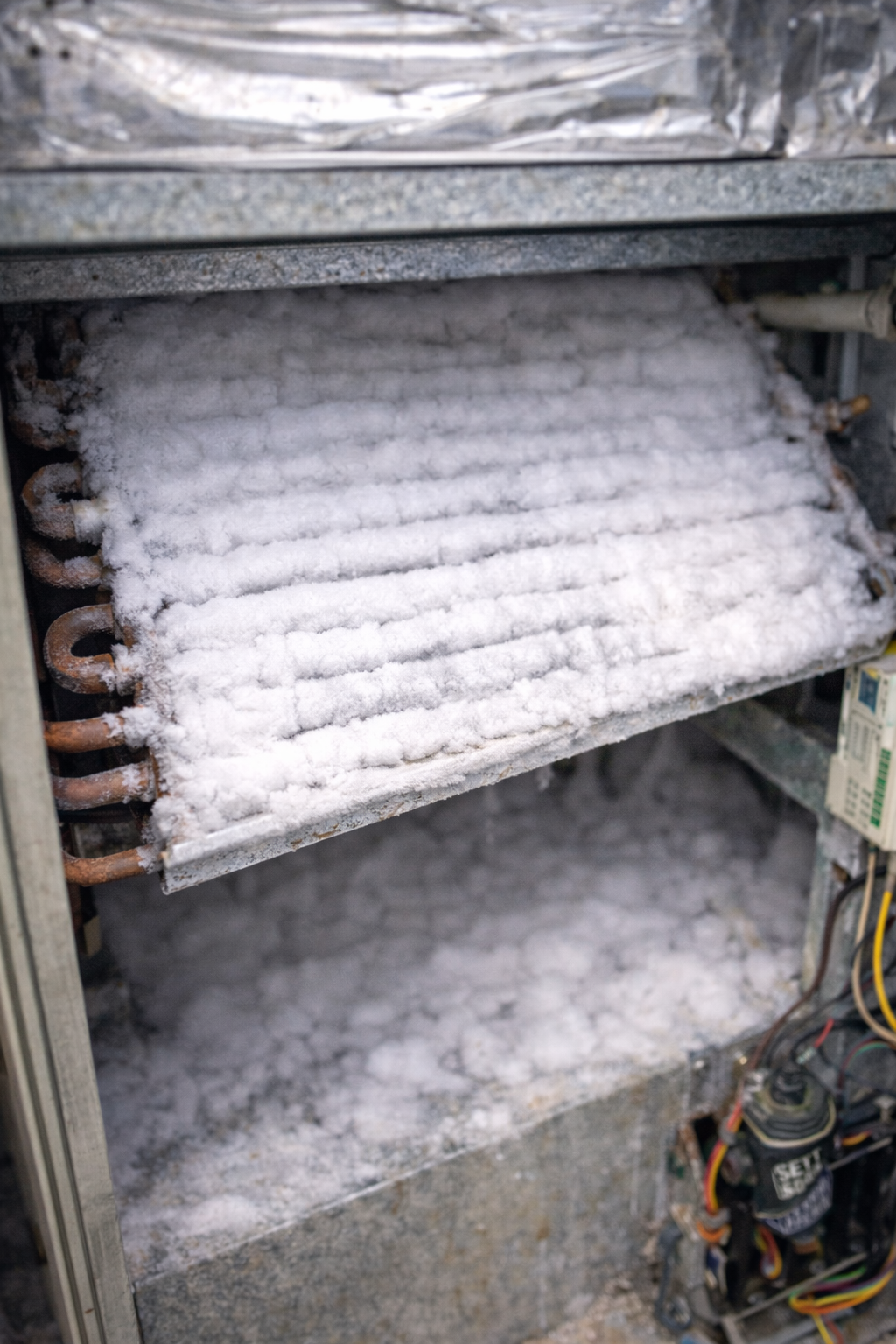
Frozen evaporator coils during high humidity periods
Systems running nearly continuously in summer
While inland HVAC units may last 12–15 years, coastal systems often average 8–10 years, sometimes longer with proper care.
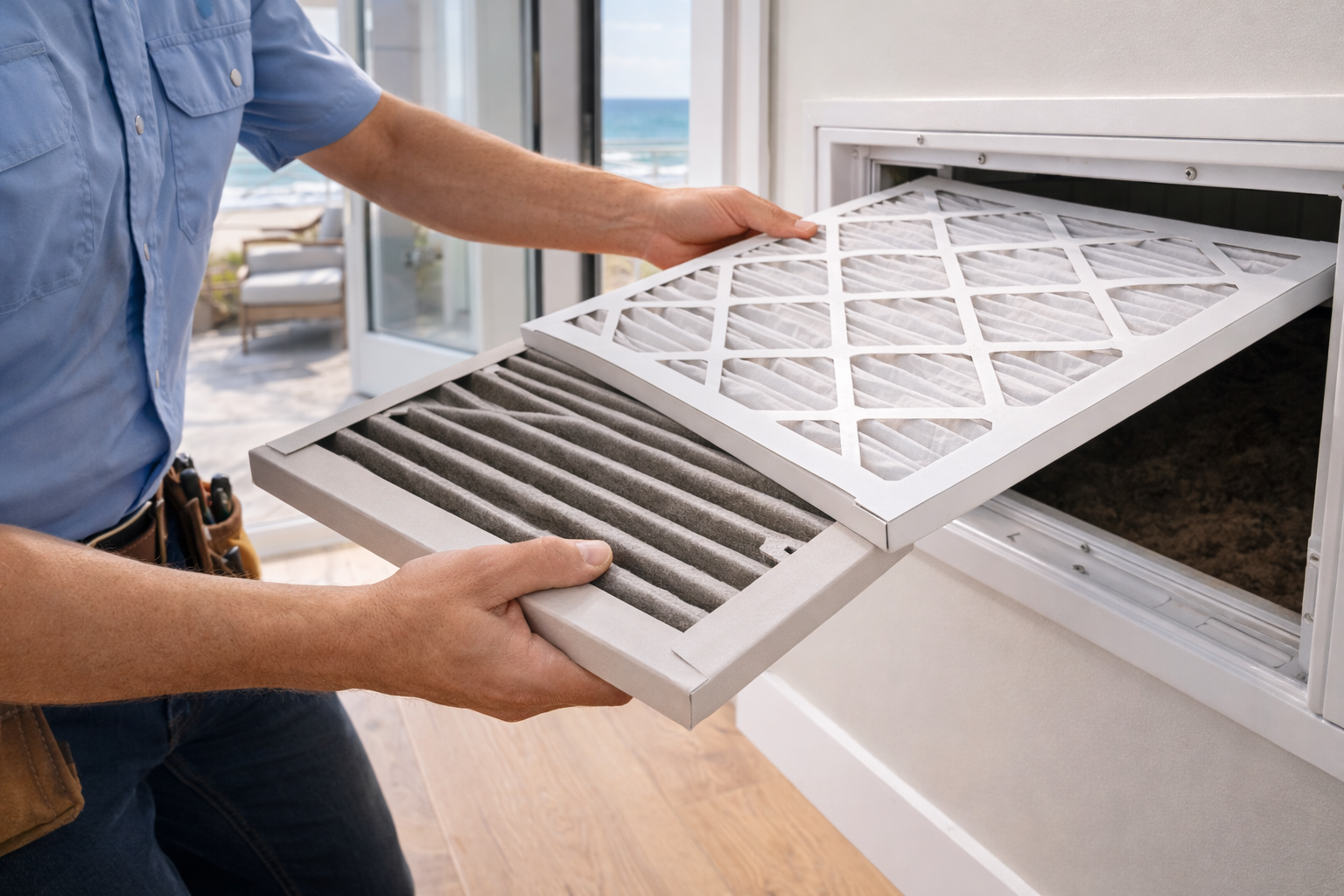
Routine filter changes, coil cleaning, drain line maintenance, and seasonal inspections help keep systems running efficiently. Preventative maintenance is especially important during peak summer months when reliable air conditioning becomes essential for guest comfort.
Mold Prevention Is Part of Coastal Home Care
In coastal areas, moisture is simply part of the environment.
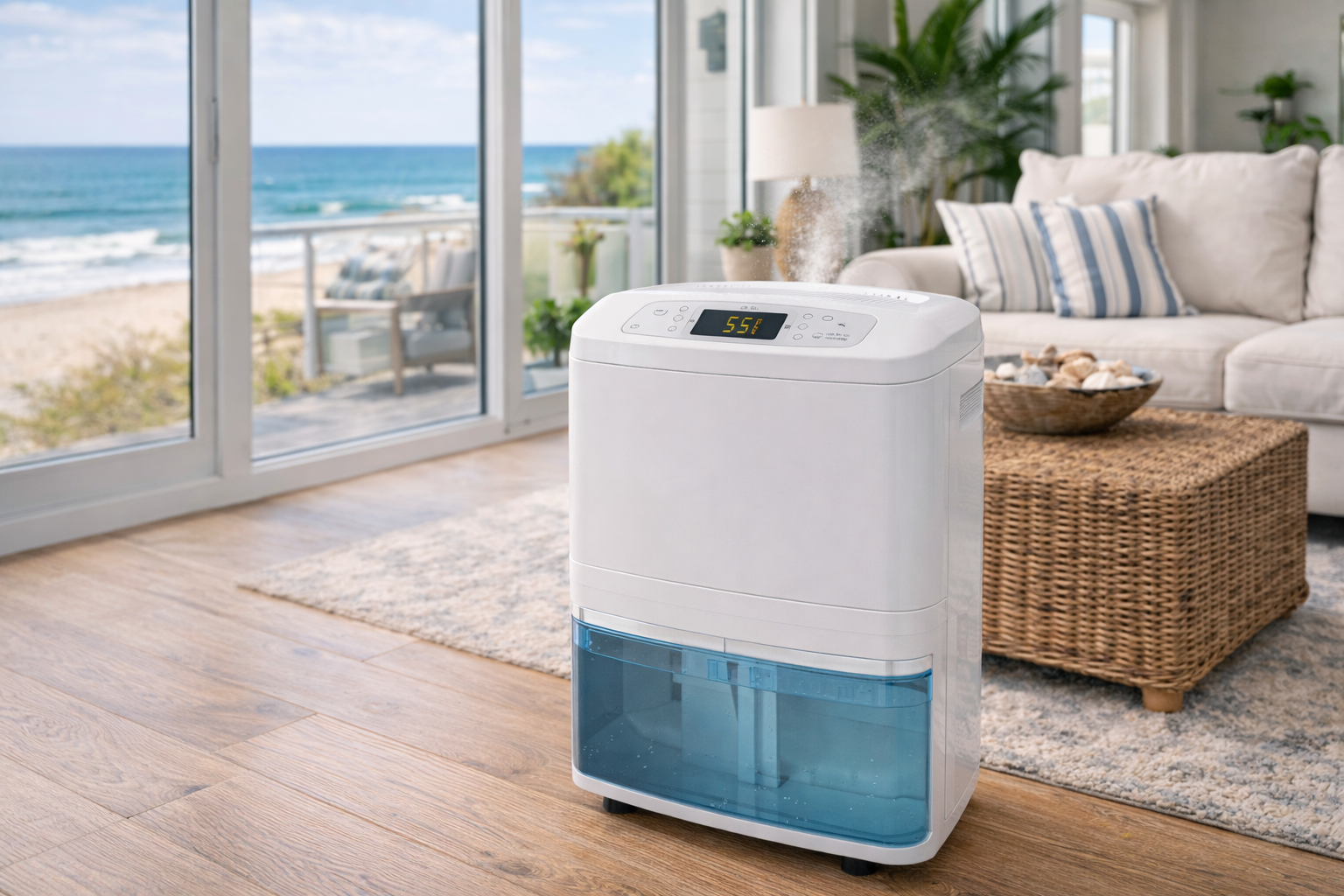
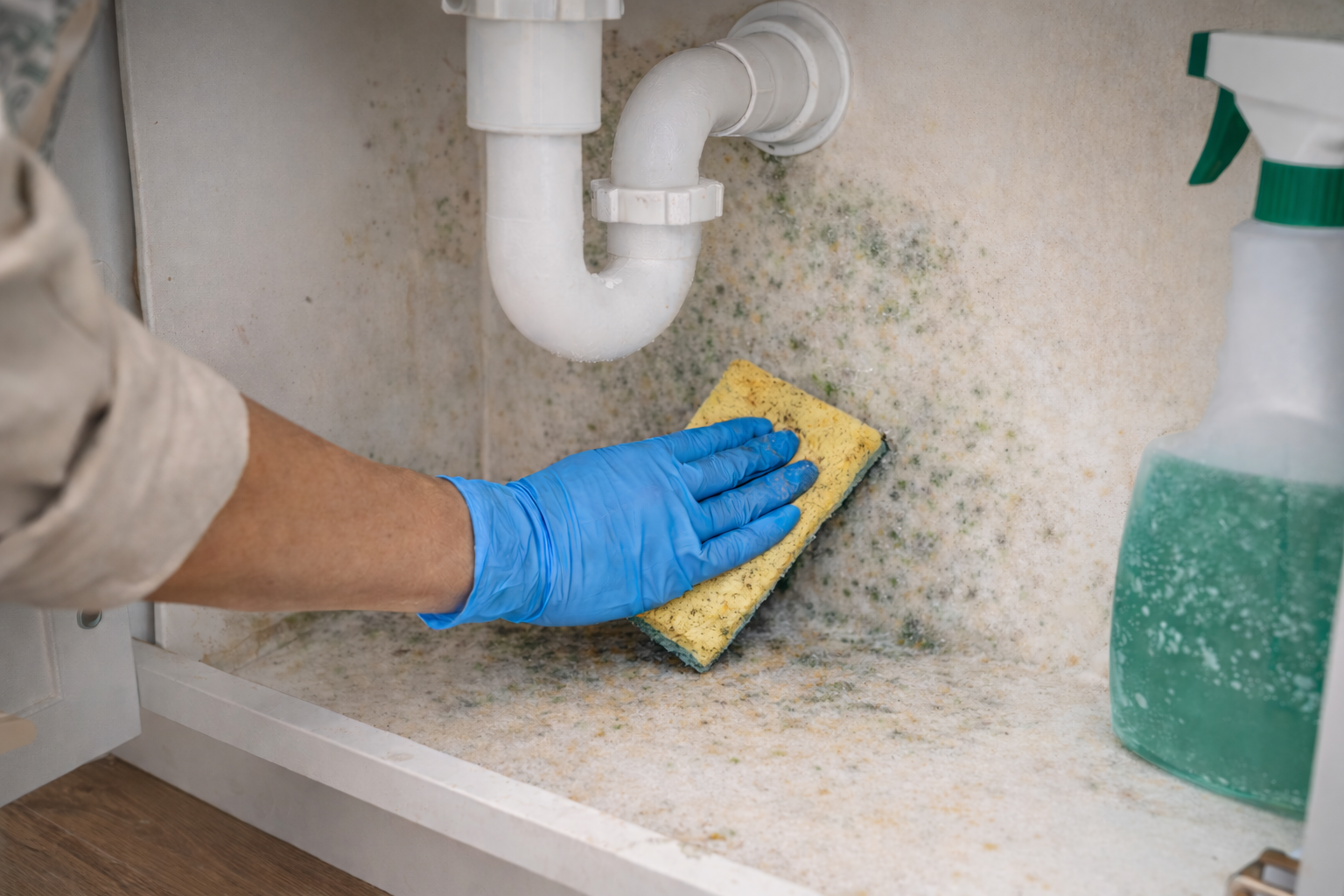
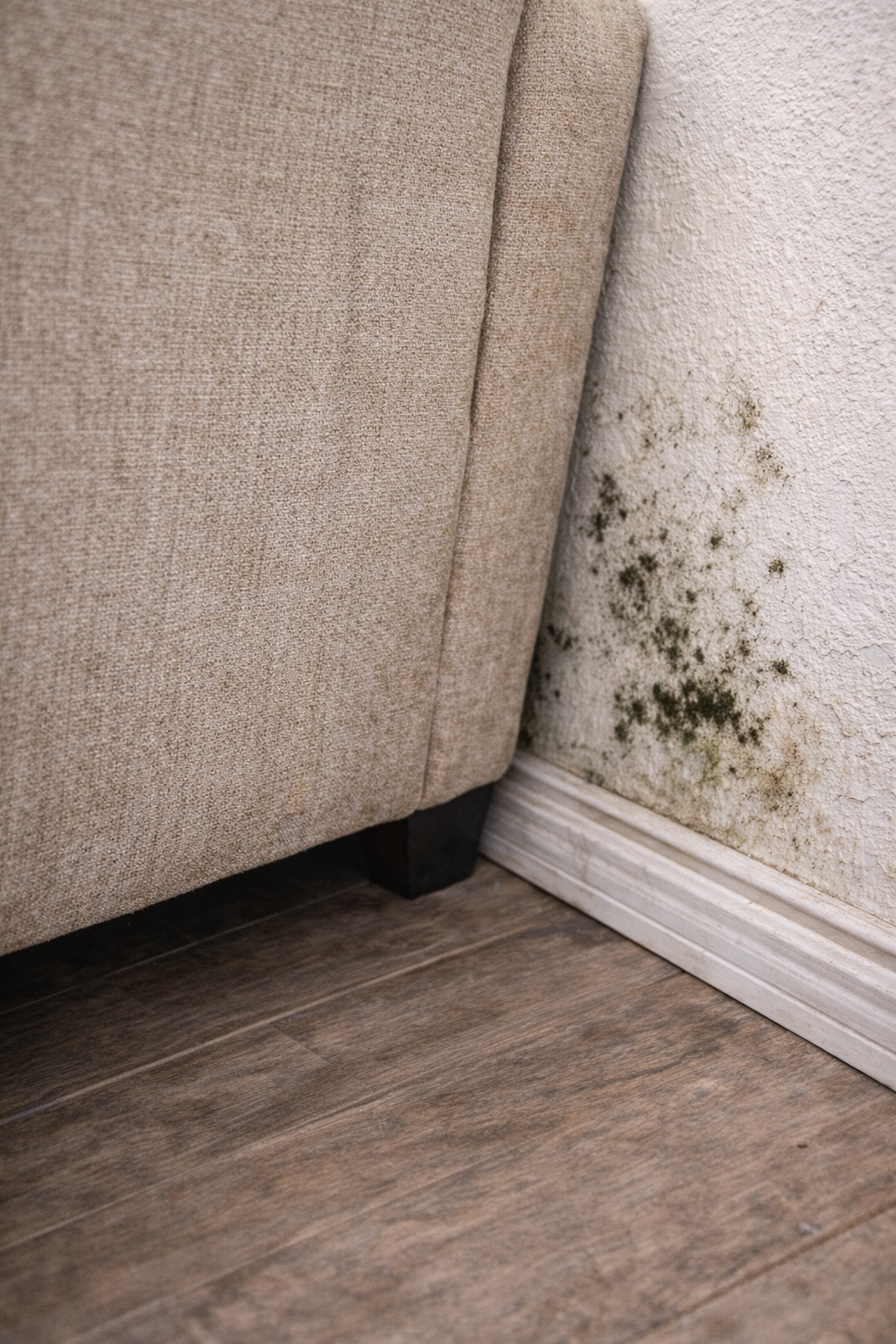
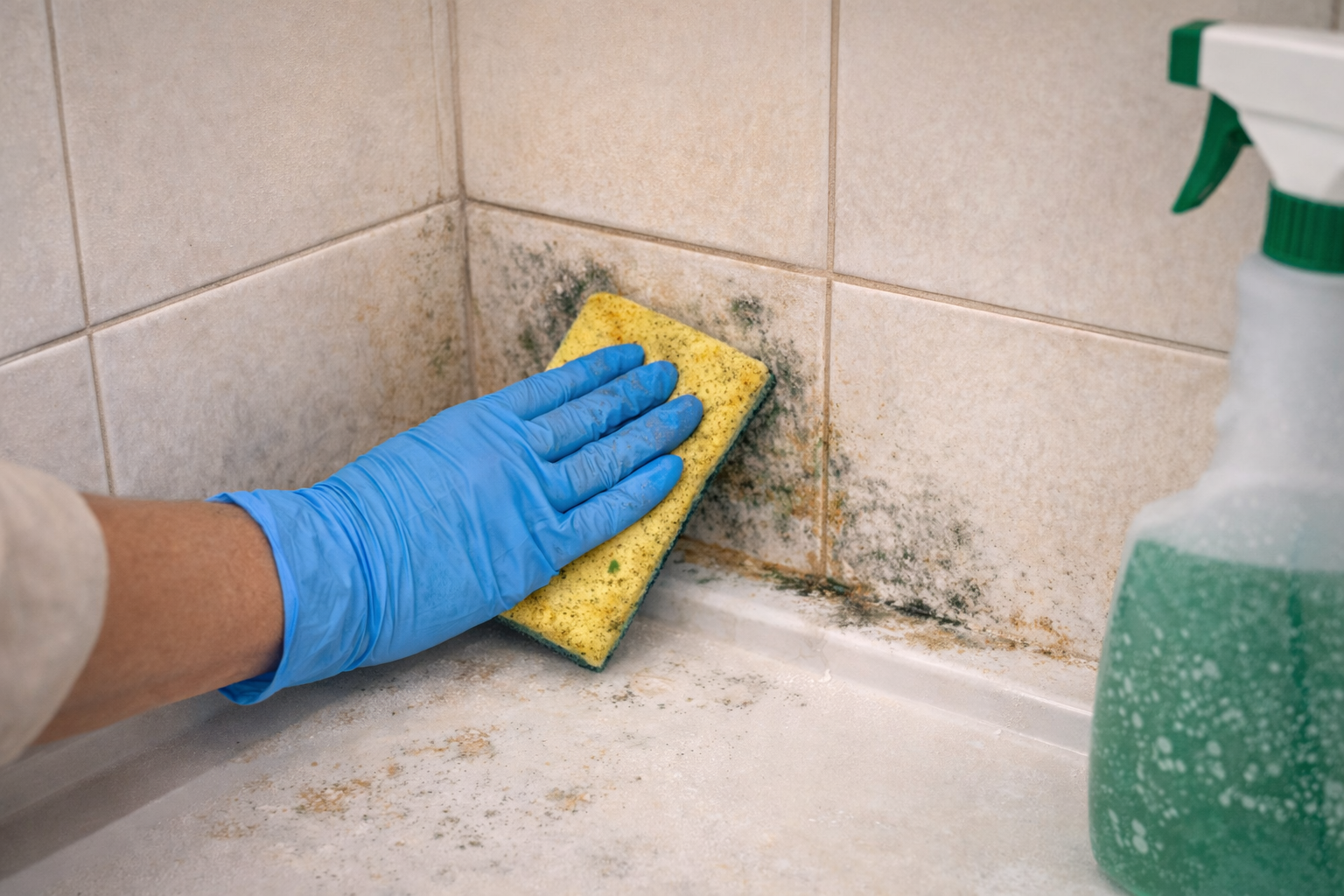
Even when it’s not raining, the air often contains elevated humidity levels. If indoor humidity rises above about 60% for extended periods, mold growth can become more likely — especially in homes that sit empty between guest stays.
Areas that deserve extra attention
Behind furniture
Closets and cabinets
HVAC vents and air handlers
Bathrooms
Under sinks
Mattresses and upholstered furniture
The good news is that humidity control tools make prevention very manageable.
Many coastal homes use:
Dehumidifiers
Smart thermostats with humidity monitoring
Continuous HVAC circulation
Ventilation between guest stays
Routine property checks
With the right systems in place, humidity management becomes a regular part of maintaining a healthy indoor environment.
Storm and Hurricane Preparation
Properties near the coast are naturally more exposed to storms and seasonal weather patterns. Because of this, preparation simply becomes part of responsible property management.
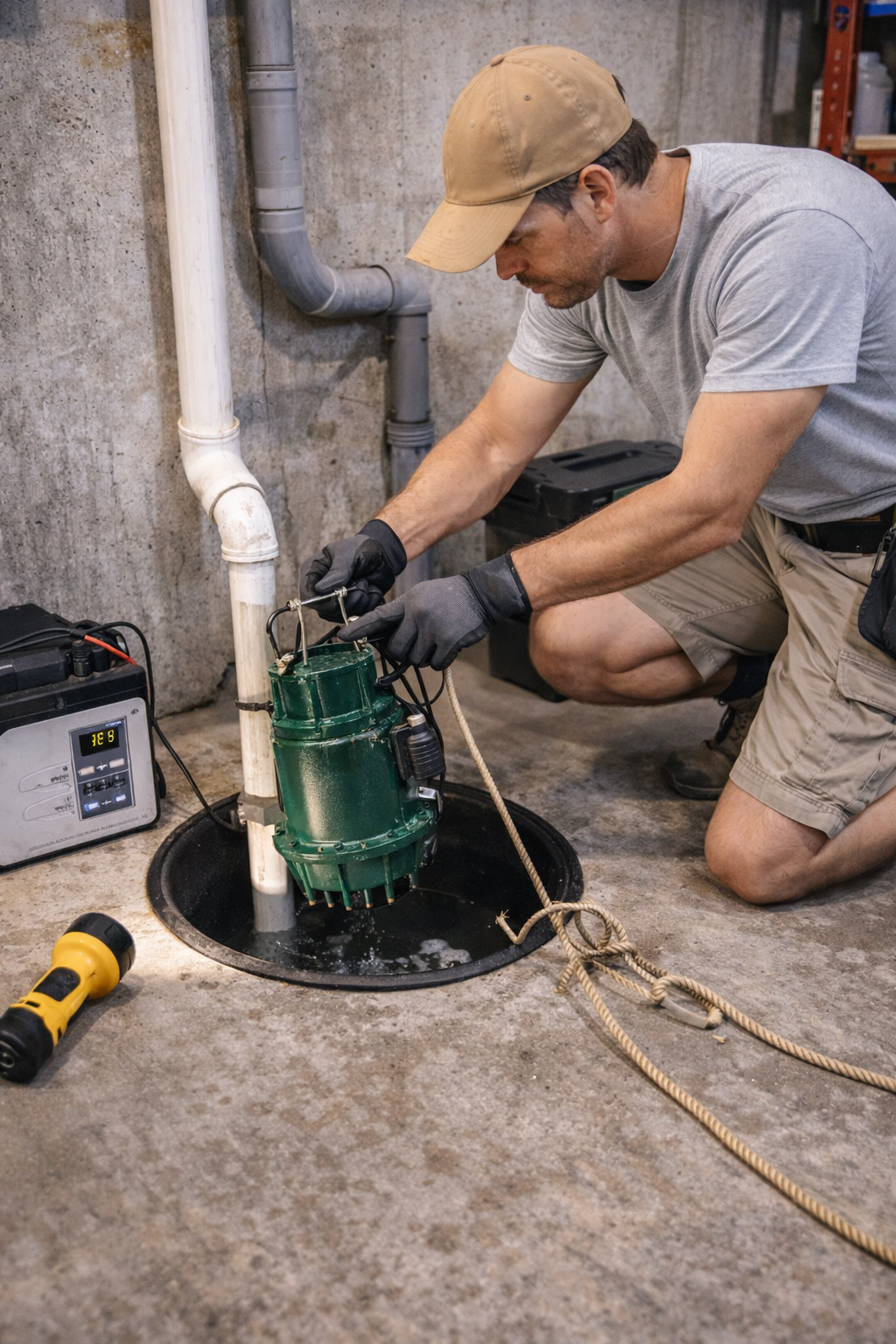
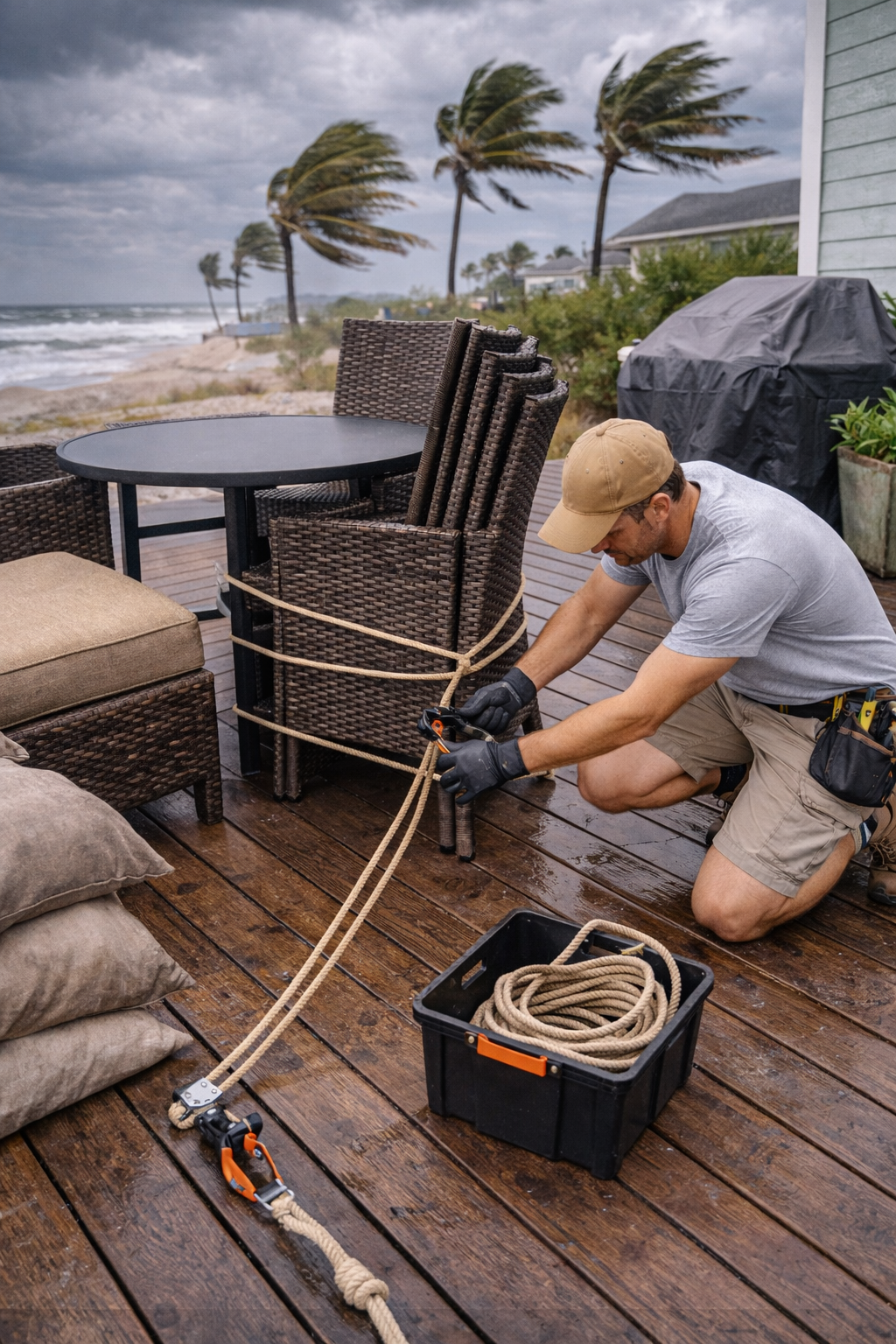
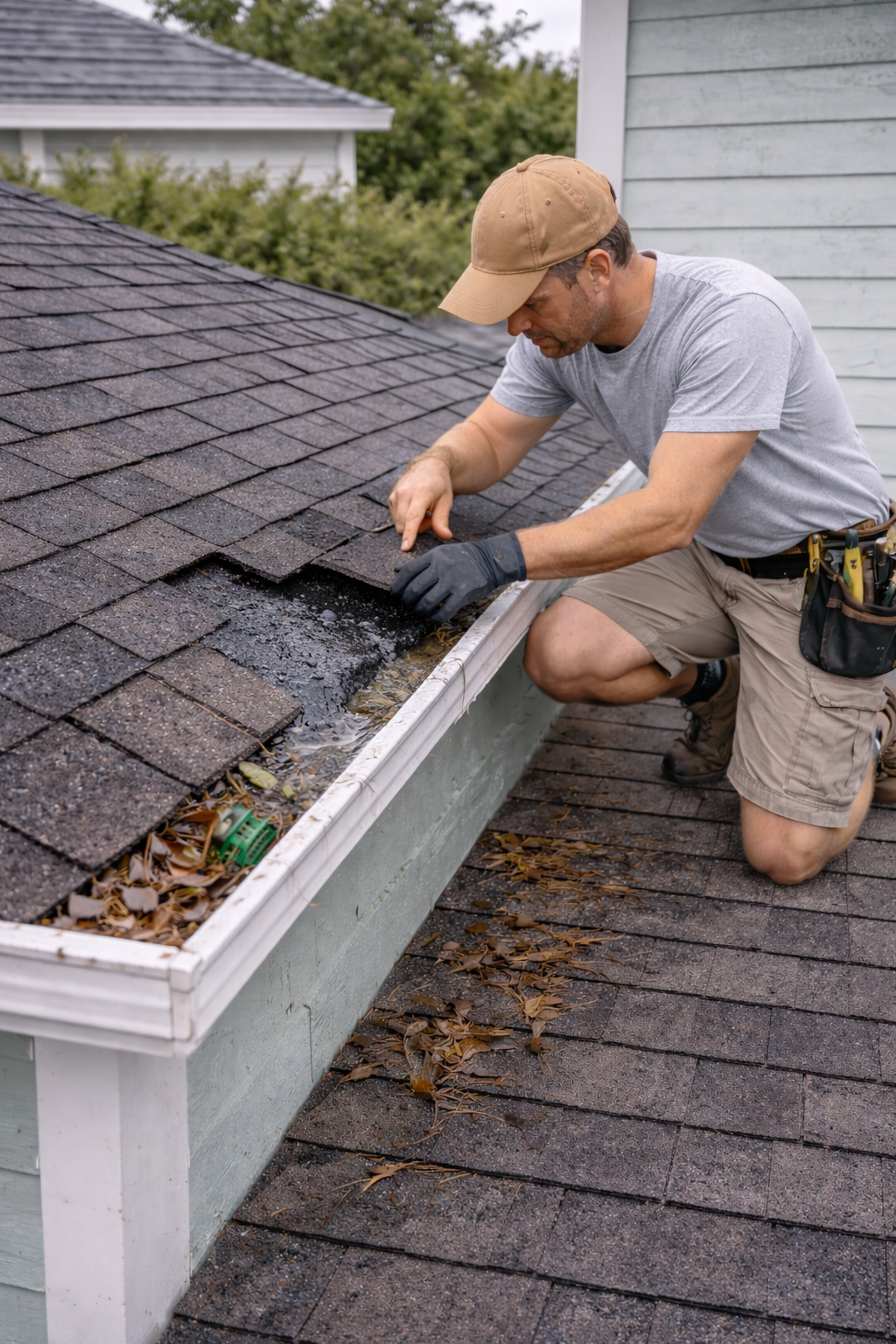
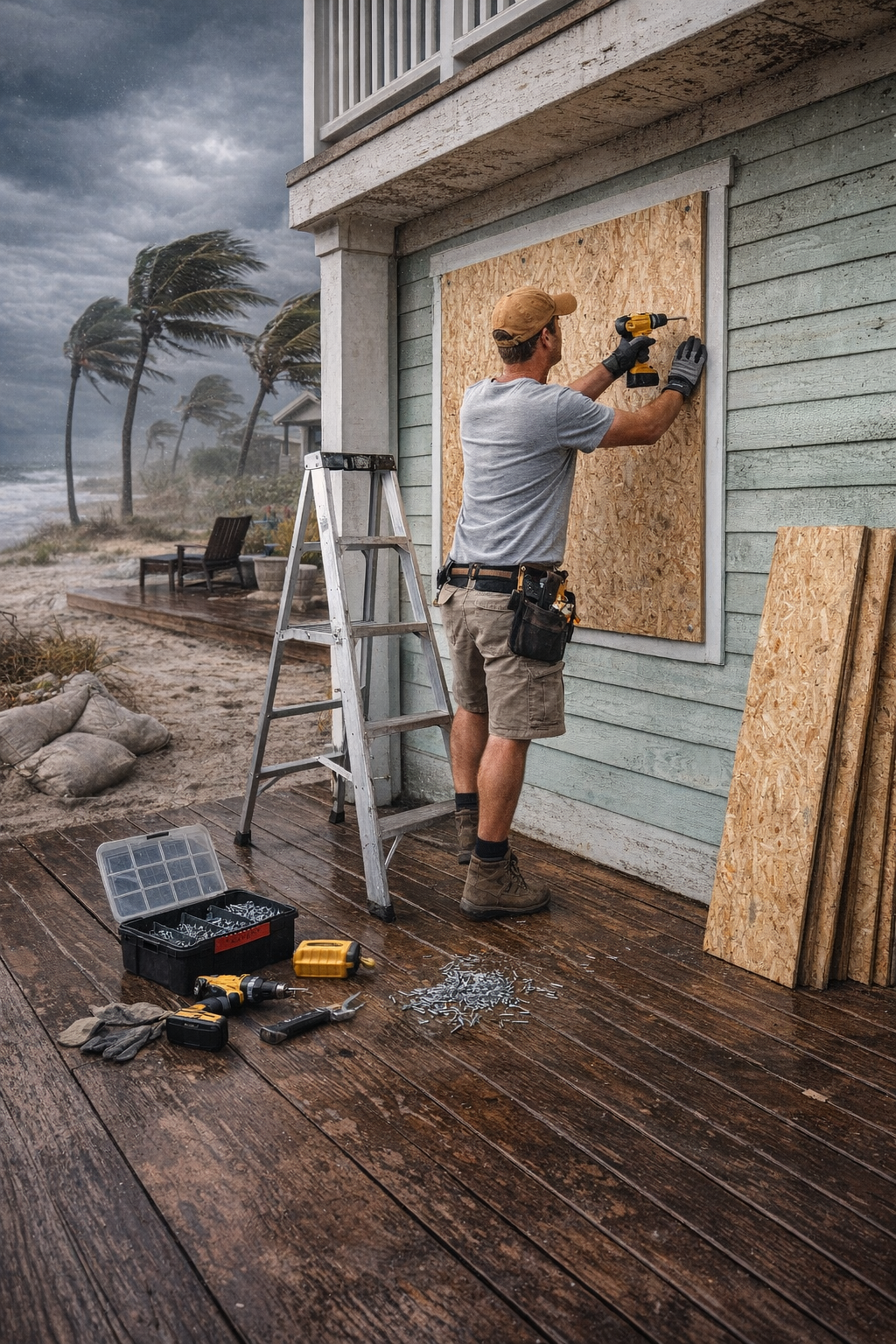
Typical pre-storm preparation includes
Securing or storing outdoor furniture
Installing shutters or storm panels
Moving grills and decorative items indoors
Checking roof drainage and gutters
Inspecting sump pumps and entry points
Communicating with upcoming guests
After a storm passes, properties are typically inspected for:
Debris
Roof or siding damage
Water intrusion
Minor repairs that may be needed
These inspections help ensure that small issues are addressed early and the home remains ready for guests.
Guest Expectations at the Beach
Beach travelers usually aren’t just booking a place to sleep — they’re booking a vacation experience.
That means guests tend to appreciate details that make their stay comfortable and memorable.
Common expectations include:
Fully stocked kitchens
Outdoor gathering spaces
Clean grills
Beach equipment
Fast and reliable internet
Cool indoor temperatures during summer
Quick communication if questions arise
Because beach trips are often special occasions for families or groups, these small touches can have a big impact on guest satisfaction and reviews.
Seasonality: How Beach Rental Revenue Works
Beach markets often follow strong seasonal demand patterns.
A typical year might look something like this:
Peak summer: very high occupancy and revenue
Shoulder seasons: moderate bookings
Off-season: fewer stays but ongoing property care
Many beach homes generate a large portion of their annual revenue during the busiest summer weeks. Strategic pricing and calendar management during those peak periods play a major role in overall performance.
Even when bookings slow during off-season months, regular maintenance, inspections, and upkeep continue — helping ensure the property is ready when demand returns.
Why Many Owners Choose Professional Management — and Where EasyRes Hosting Fits
After experiencing a season or two of coastal rentals, many owners realize that the biggest challenge isn’t attracting bookings — it’s coordinating the day-to-day operations that keep everything running smoothly.
Beach properties require consistent attention. Cleanings must align perfectly between guest stays, maintenance issues need prompt attention, and unexpected situations — from HVAC concerns to lockouts — can arise at any time.
Add in storm preparation, vendor coordination, and guest communication, and the property becomes an ongoing operational effort rather than an occasional task.
Because of this, some owners choose to work with a property manager — not to step away from their investment, but to add structure and consistency to its operations.
EasyRes Hosting supports owners by coordinating routine details such as scheduling cleaners, overseeing maintenance, communicating with guests, and managing calendars as seasons shift.
The goal is simple: keep the home well-maintained, responsive to guests, and easier to manage — especially for owners who live out of town or operate multiple properties.
With a strong understanding of coastal rental operations, EasyRes Hosting is well positioned to help owners stay ahead of day-to-day demands while protecting the long-term performance of their property. If you’re considering professional support, we’d be glad to talk through your goals.
